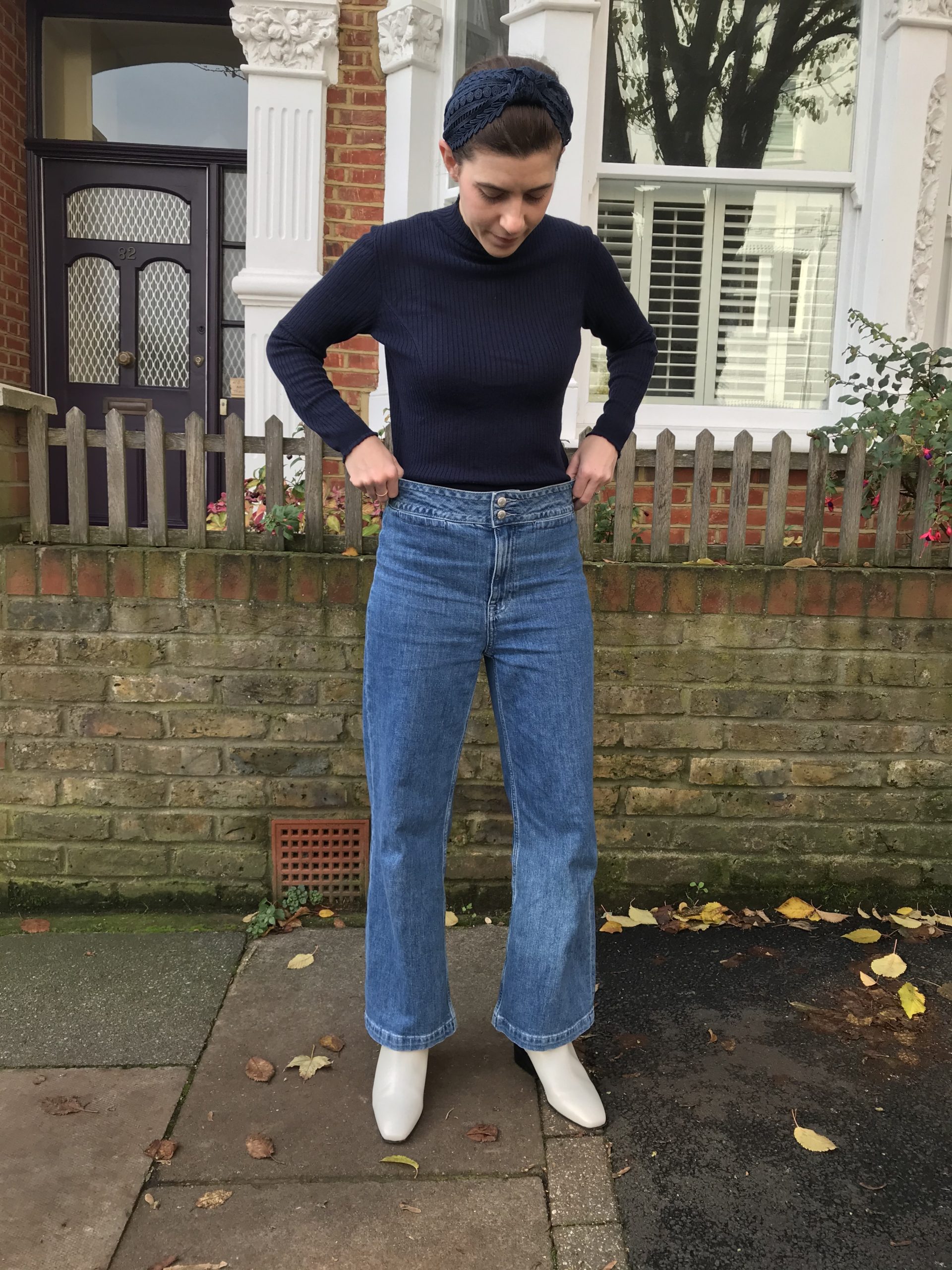
It all started with a pair of jeans. This season I bought myself a new pair of high-waist, wide-leg, exposed button denim trousers that enthusiastically nod to the 1970s. They fit me perfectly in the hips, bum, and thighs (my initial trifecta for trouser shopping), so within seconds I ripped off the tags, discovering that they are far more than a new pair of jeans – but my first ever eco-friendly fashion item, made from sustainably dyed organic cotton from a leading sustainable factory. * Awesome, I thought. But was I woke? Nope, not at all. So I decided to do some research. What’s the deal with eco-friendly fashion anyway?
The Current Situation
It seems everywhere you look these days people are going eco. Society has become increasingly aware and concerned about the environment, recognising that the planet has some serious sustainability issues for future generations. We know that recycling our garbage is vital, that plastic is destroying the oceans, and that climate change is real. (Just ask any British person about the last two abnormally hot summers they’ve had. They will happily discuss the weird weather extremes with you.)
Amongst those having eco-conscious discussions is the fashion industry, considered by many as one of the biggest culprits against the environment due to its complex manufacturing and distribution processes, as well as the disposal of its goods. In response, retailers have started creating eco-friendly fashions, as brightly noted on their garments’ swing tags and other marketing materials. Additionally, a crop of ambitious designers has popped up selling only ethical and eco-conscious clothing.
Business of Fashion recently reported that some retailers are claiming that there is actually no such thing as truly sustainable fashion, due to the industry’s underlying goal of driving consumption of new items. Additionally, they spotlighted how many labels are “greenwashing” (the act of pretending to be eco-friendly) their products in order to drive sales, without actually contributing to any environmental change. Activist and actress Jane Fonda at age 81 righteously declared she is no longer buying anything new.
When The Alarm Goes Off
After my research on the current state of eco-fashion friendliness, I am left wholly woken, but feeling ashamed, guilty and gross for my ignorance. Nothing makes you feel more disgusting than watching a sheep sheering video whilst wearing a wool sweater. With my head held down, I loathed myself.
For so long fashion has been a vital part of my life. It has employed me. It has empowered me when I was shy. It has allowed me to express myself when I was brave. It brings beauty to my mundane life. And whilst I take some pride in knowing that I don’t discard items easily (I’ll keep a piece of clothing for 20 years if it stays in good condition, which I always aim to do), I feel awful for my shopping sprees and lack of buyer’s awareness. So what’s a newly woke asshole to do? Arising from my stupor, the answer becomes clear and simple – make an effort.
Shopping eco-friendly is harder than shopping lackadaisically. It takes initiative and time to learn what is “best in class” for sustainable clothing, a field the faces constant innovation. Searching out reputable retailers (now possible via app Good On You) and the market’s leading sustainable materials requires a keen eye and a critical mind; all whilst maintaining a little restraint from falling back into old shopping ways.
Realistically I’m not going fully eco-friendly over night; curating a closet is a process based off want and need. But as I now say, “clean closet, clean conscience,” so bring on the eco-chic styles, each and every season.
Top Five Ways To Shop Eco-Friendly
In an effort to make eco-friendly shopping a little easier for other newly woken folks like me, here are my top five ways to shop more sustainably.
1 | Shop Second-Hand
As new material consumption is one of the biggest obstacles for the environment (as mentioned above), a solution is simple – shop used; or as it’s more fashionably referred to as vintage, pre-loved, reclaimed, or recycled.
Whilst there has been an upswing in manufactures using recycled materials to make new items (case-in-point: my new jeans), second-hand stores proliferate the high streets and online retailers like eBay and the newly launched sustainable fashion website Buho, as well as apps like Depop make finding pre-loved items increasingly easy.
Additionally, one of the growing eco-trends is the act of “swhopping,” shopping via swopping (more on that later).
2 | Just Say No To Animal-Made Fabrics
Fur has long been criticised for its unabashed use of furry creatures and ugly manufacturing methods, so just say no. Even Queen Elizabeth recently renounced wearing fur anymore. Additional animal-made fabrics to avoid are angora, cashmere, mohair, wool, leather and suede. Wool is often gathered so harshly that sheep are left bleeding from the process; all you need to do is watch a PETA video to fully understand the gross gravity of this ethical issue. And the complexity of the leather industry puts a huge strain on the quality of our land and air.
Opt for fabrics that use no animal by-products at all, such as: Hemp, Ultrafabrics® Polyurethane (PU), TencelTM or Lyocell, and SeacellTM. These are all eco-friendly fabrics that do not use animals for manufacture and are leaders in the industry for sustainable production methods.
If shopping for wool then look for companies that operate under the Responsible Wool Standards (RWS), maintained by the Textile Exchange, a global non-profit agency that aims to enhance the integrity of the preferred fibres industry. Other eco-conscious agencies to note are ZQ and the Soil Association of Organic Standards.
3 | Avoid Cotton and Synthetic Fabrics
Traditional cotton (while seemingly innocent) uses vast amounts of water and pesticides, whilst synthetic fabrics (like nylon and polyester) are made with plastic, contributing to the planet’s ever-growing landfill issue.
Instead look for organic cotton or naturally-made bamboo, as these fabrics, although not perfect solutions, are more eco-friendly options in the current marketplace because of their lack of pesticides. Better yet, try TencelTM (as mentioned above), which has been dubbed the best alternative to cotton, because of its ultra soft feel and low carbon footprint.
4 | Look For Local
One of the biggest challenges for the environment is transportation, a necessary part of the apparel industry, but a detrimental factor polluting the planet’s air.
Try looking for clothes made with a minimal commute by shopping from brands that use local factories and locally sourced materials. Check out retailers’ websites for their sourcing policies and look for a “made in” label, ensuring that your clothes are produced nearby.
5 | Unite For Workers’ Rights
The fashion industry’s history for ethical workers’ treatment and rights has not gone untarnished. But some companies are now operating with a strict “code of conduct,” ensuring that they work with partners and factories with a high ethical standard, operating with safe working conditions, fair wages, and no child labour. Check out retailers’ websites for their partner policies, looking for full transparency.
* Purchased in November 2019 from J.Crew, from the Point Sur collection. Accordingly to the retailer, these jeans have been made from sustainably dyed organic cotton denim. And they were crafted at a LEED®-certified factory called Saitex, one of the most sustainable denim manufacturing facilities in the world, using renewable energy and recycled H2O. Solar power and miniature windmills save the facility 5.3 million kilowatts of energy per hour. Plus, Saitex is also a Fair Trade Certified™ factory that contributes to the Community Development Fund.
** Business of Fashion article referenced is “These Designers Want to Fight Climate Change. Just Don’t Call Them Sustainable,” by Sarah Kent and Cathaleen Chen, published on November 7, 2019.

Leave a Reply